 |
| RCA Design Interaction student Jinhee Park rearranging her 'Solitude' installation |
Showing posts with label History. Show all posts
Showing posts with label History. Show all posts
Tuesday, 9 February 2016
Changing Minds at Southbank: Mental Health Arts Festival


Saturday, 13 June 2015
Turning Japanese: 7 Golden Rules of Social Etiquette
 |
| A prayer memorial at Gotemba Heiwa Koen (Peace Park), enroute to Mt Fuji. Also home to dog statues donated by Buddhist cities over Asia. |
It'd be rude not to explain Japan's lesser-known, mind-boggling rules of social engagement.
Turning Japanese: Etiquette
Life in Japan is built on a historical foundation of etiquette and social conformity. It's impossible to not be impressed by the friendliness, helpfulness and politeness. It's not just their Ps, Qs and remarkable 90 degree bowing abilities either. The values of ensuring safety, honesty, community, humility, respect and responsibility are evident not simply in the behaviours and actions of the people, but in their products and built environment.
It's worth doing a bit of research on regional customs before your visit. It's not an exhaustive list, but as a guest in a foreign country, you'll save yourself the embarrassment, feel infinitely more immersed and appreciated for making the effort.
1. Honesty is often the only policy
Money does not necessarily 'rule' all in Japan. Tipping is not normally practiced. In fact, it's considered an insult to tip your taxi driver because it implies he didn't do a good enough job. On one memorable occasion I was chased down a station by a panicked sushi restaurant hostess who thought I'd left my purse on my seat.
2. And when not to tell the truth...
Most tourists are familiar with the phrase "Oishi" (delicious) and that it's polite to audibly let the restaurant owner/chefs hear your appreciation of their cooking. But for locals, "oishi" is what you exclaim regardless of what you're served tastes like. "Japanese people tend to say the negative things indirectly. Because they try not to hurt the feeling of others, and to avoid confrontational situations."*
3. Exact match
Quality assurance, food safety and accurate labelling are taken very seriously in Japan. It's common to see every ingredient and calorie declared on menus and outdoor signage. That includes the irresistible matcha ice-cream stalls you'll find everywhere.
Growing 'perfect produce' is a national obsession. In grocery marts you'll find two or more varieties of fruit and veg that look identical but cost differently - as prices are based on their specific level of nutrients and sweetness. "As with anything made in Japan quality standards are high, so if you want the very best you have to pay for it," said Fu-san, our wise counsel during the trip.
4. The 'preciousness' of children
The national societal concern to protect young ones can seem a bit extreme for visitors. For starters there are some ridiculously weird school regulations. Most primaries require students to wear Bob the Builder-esque 'pedestrian helmets' whilst walking to school. Why? To reduce the risk of head injury, even though evidence has shown they make little difference. However, in context of its ever-dropping birth rate it's a somewhat understandable measure.
Ironically however, schoolchildren travel to school unaccompanied. As for adults, speed jaywalking is widespread - Fu-san describes Tokyoite jaywalking as 'legendary'.
5. Knowing the difference between left and right
In the UK, you're expected to stand on the right side of the escalator as a sign of courtesy. For most of Japan however, people stand on the left. Confusingly, in the Kansai region (where Osaka is located), people stand on the right. A fascinating explanation for this bit of transport etiquette, which also applies to drivers can be found here. Hint: it's to do with samurais.
6. The Green Party
As natural energy resources are limited, society makes a point on everyone doing their bit for conserving the environment. The streets and parks are spotless. General waste bins are generally super-hard to find, unlike recycling bins. Every drinks vending machine is accompanied by a unit for plastic, metal and glass. "If you live here and consistently don't do your household recycling correctly, you are likely to be shunned by your local community." said Fu-san.
7. Wildlife and folklore
Due to the active tectonic plates its 6000+ islands lie on, Japan's urban spaces are densely over-populated. Throughout history nature and humans have always had a curiously intimate and sometimes challenging relationship, which is also reflected in its culture.
For example, because they can only leap forwards, frogs are considered a good luck mascot that bring progress - you'll often spot decorative stone frogs in temples, urban parks, even on chopsticks. At the entrances of eateries and bars keep an eye out for a cheeky anthropomorphic creature which looks like the mole from 'The Wind in the Willows'. This is 'tanuki', the centuries old cult-famous Japanese raccoon dog/flying squirrel. "The legendary tanuki is reputed to be mischievous and jolly, a master of disguise and shapeshifting, but somewhat gullible and absentminded"**. And in the city of Nara, the Tōdaiji, temple welcomes deer as well as humans guests because the former are supposed to be sacred.
 |
| Making a fancy entrance - a family of Tanunki |
Do you know any traditional or modern rules of Japanese etiquette? I'd love to hear from you!
Up Next: Innovation
*Sources: JapaneseLesson, **Wikipedia
Saturday, 6 June 2015
Turning Japanese: 5 Twists on Traditional Culture
 |
| The Lais at Kinkaku-ji 'The Temple of The Golden Pavilion', Kyoto. |
Welcome to the first chapter in a series of fascinating cultural observations from a recent holiday in Japan.
Before I begin I must credit my spirited, mile-a-minute tour guide Fu-san (Ms Fu) for sharing her insider knowledge as a Chinese woman living in Tokyo for the past 10 years.
These are literally nuggets of disparate facts I picked up along the journey. I tried to group them together as best as I could, so I apologise if they sound a bit haphazard.
If you are Japanese/am living in Japan and disagree with any of the following, please do let me know.
Turning Japanese: 5 Unexpected Twists on Traditional Culture
Ancient Architecture
It's impossible to visit Japan without encountering a breathtakingly photogenic temple. Spurred by the introduction of Buddhism by Chinese monks in the 6th century, the mass building of temples were heavily influenced by Chinese Tang and Sui Dynasty styles of architecture. The Japanese adapted and tweaked many, many historical inventions from the China which exist today - I'll cover more on this in a later chapter on innovation details.
Social Status
Can you guess which groups of men and women enjoy highest social status across generations in Japan? For men, Sumo wrestlers - apparently their heavy paypackets make them the most eligible bachelors in Japan. "Sumo wrestler wives are told to tie their husbands up in bed to avoid being squashed to death before they inherit their fortunes" my guide told me - I couldn't tell if she was joking or not. For women, Geishas are seen as well-respected, multi-talented businesswomen. It is expensive to train as a geisha as it is to be entertained by one. Since the interest in traditional arts is fast declining, so are the number of apprentices. I was slightly disappointed to have left Kyoto (the heart of geisha culture) without having encountered a real geisha.
Can you guess which groups of men and women enjoy highest social status across generations in Japan? For men, Sumo wrestlers - apparently their heavy paypackets make them the most eligible bachelors in Japan. "Sumo wrestler wives are told to tie their husbands up in bed to avoid being squashed to death before they inherit their fortunes" my guide told me - I couldn't tell if she was joking or not. For women, Geishas are seen as well-respected, multi-talented businesswomen. It is expensive to train as a geisha as it is to be entertained by one. Since the interest in traditional arts is fast declining, so are the number of apprentices. I was slightly disappointed to have left Kyoto (the heart of geisha culture) without having encountered a real geisha.
Bento Boxes
The ubiquitous Bento box was originally imported from Song Dynasty China, known as 便當 ('biàndāng'), meaning "convenience". The most lavishly decorated examples, which feature covers or be stacked in presentation are Tang and Ming dynasty inspired, made with luxurious materials such as lacquered wood and aluminum. There are many types of bento boxes, defined by the occasion they are served at and the cuisine that fills them. Homemakers often spend a week in advance planning bento boxes for their husbands and children, varying ingredients according to their nutritional needs. Colourful, creative character bentos ('Kyaraben') are often the only incentive for kids to eat their school lunches. Although there's plenty of convenience stores and vending machines around, homemakers tend to save their bulk supermarket shop for the weekends. It is undertaken as a family activity, seen as a break from their notorious work ethic.
The ubiquitous Bento box was originally imported from Song Dynasty China, known as 便當 ('biàndāng'), meaning "convenience". The most lavishly decorated examples, which feature covers or be stacked in presentation are Tang and Ming dynasty inspired, made with luxurious materials such as lacquered wood and aluminum. There are many types of bento boxes, defined by the occasion they are served at and the cuisine that fills them. Homemakers often spend a week in advance planning bento boxes for their husbands and children, varying ingredients according to their nutritional needs. Colourful, creative character bentos ('Kyaraben') are often the only incentive for kids to eat their school lunches. Although there's plenty of convenience stores and vending machines around, homemakers tend to save their bulk supermarket shop for the weekends. It is undertaken as a family activity, seen as a break from their notorious work ethic.
Wall Whispers
Here's one very good reason not to have an argument in Japan. The construction methods and materials used there mean their walls are literally thin. I can personally testify upon this truth from every hotel I struggled to fall asleep in. To be fair, you'll seldom hear a Japanese person raise their voice, indoors or outdoors.
Here's one very good reason not to have an argument in Japan. The construction methods and materials used there mean their walls are literally thin. I can personally testify upon this truth from every hotel I struggled to fall asleep in. To be fair, you'll seldom hear a Japanese person raise their voice, indoors or outdoors.
Thinking Inside The Box?
Finally a contentious point Fu-san mentioned from her time working in Japan was the traditionally systematic, detail-driven and somewhat predictable mindset of the population as a whole. And how it contrasts to the flexible, entrepreneurial and opportunistic thinking of the Chinese. I'm not convinced of such a generalisation, but it was fascinating nonetheless to hear her point of view.
Up Next: Ageing, Sex and Fantasy
Sunday, 25 May 2014
Uncovering Clerkenwell Design Week 2014's Secrets
 |
| Clerkenwell Design Week Map. Source: clerkenwelldesignweek.com |
Saturday, 10 August 2013
Hot Off the Press - Phoenix Fashion and Design Features
Like our Great British weather, PHOENIX Magazine's new summer issue 'Sunshine & Showers' is out now. Starring the sexy siren/tv kitchen goddess which is Gizzi Erskine (the only woman who can pose tattooing a piece of pork belly and still look smokin' hot), designer Tom Dixon and actress Vanessa Kirby, this issue's a scorcher not to be missed.

Here's a snippet from the magazine's 'The Showpiece' page I edited, a breathtaking smashed porcelain print dress by Latvian/Israeli London duo Fyodor Golan, from their 'Holy Mountain' collection.
Known for their attention to detail that dramatically accentuates the figure, I for one can't wait to see what their September LFW SS14 catwalk has in store.
 |
| Photo by Charlie Bettinson |
From 18k plated-gold teapots, up-cycled Cold War lighting to the flamboyant designer of 'Happy Chic', here's a few more PHOENIX pieces I've authored.
Click on the links below the images to read the whole story.

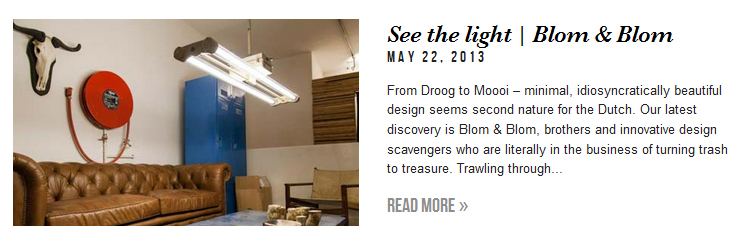
http://www.phoenixmag.co.uk/blog/designing-happy-chic-with-jonathan-adler/
http://www.phoenixmag.co.uk/features/blom-blom-lighting-design/
Friday, 14 June 2013
The Art of Hong Kong Eye, Saatchi Gallery
 |
| Inside Amy Cheung's 'Toy Tank' at 'Hong Kong Eye' |
Saatchi’s 'Hong Kong Eye' is an 18-course amuse-bouche of the region's brewing contemporary art scene. If there was any doubt, just look at renowned Swiss fair Art Basel's debut in Hong Kong last month – which attracted plenty of customers (including Kate Moss and Roman Abramovich apparently) eager for a slice of the massively lucrative market.
Sponsored by Prudential, Asia's leading corporate UK owned insurance company (the hint is in it's name), I was keen to discover how the show would, as its official introduction claims, “draw on (artists) specific cultural backgrounds to expose the city’s nuances” convincingly to new audiences.
Known as " The Pearl of the Orient", it’s easy to be seduced by the city's glossy patina: a teeming hyper-networked metropolis, breathtaking skyline boasting most Rolls-Royces per capita. But at what social/psychological price? This is unadulterated HK in the eyes of its own artists; where unspoken anxiety simmers headily throughout the exhibition.
 |
| Amy Cheung's life-sized wooden 'Toy Tank' |
Standing in the first room is Amy Cheung's full-size wooden ‘Toy Tank’, a loaded choice of material for a symbol so potent. Visitors are invited play combat; crawling inside the vehicle, submerged in darkness. Video screens and joysticks let one navigate and unleash gunfire within a simulated Saatchi Gallery. Complete with realistic sound effects, the haunting atmosphere and unmistakable echoes of Tiananmen are inescapable. Curiously lying in its path is Adrian Wong's five-foot animatronic peanut soft toy, convulsing like dying road-kill. Novel child's play aside, these examples show how local artists are incorporating the cutting-edge technology in their work. Compared to the west, its apparent lack of established arts infrastructure and rules appears to work in its favour.
Justin Wong’s 'Difficult Life Decision' encompasses two works. The first is a giant periodic table of stickered symbols across an entire wall. Parodying a typical gruelling cycle of work, stress and digitally-prompted demands, the day starts with "Email” and ends in “Blank”, contrasting with signs of human woes like “Why Me”, “Mortgage” and “Day Off”. It’s the blueprint of the kind of living mode Londoners are frighteningly catching up with.
 |
| Justin Wong 's 'Difficult Life Decision'' |
The second part is a kiosk that asks rhetorically “How Are U Today?” Conceived, explains the helpful touch screen, to “help overworked white-collar employees contemplate life or even create a new one”, by anonymously sharing their secrets, worries and pent-up frustrations. If Wong’s works visually encapsulate HK’s insanely-paced work ethic, the definitive soundtrack belongs to Joao Vasco Paiva's installation of MTR (HK’s underground) turnstiles. A clanging-metal racket so ingrained as a Hong Konger; I barely noticed how irritatingly loud it was it until now.
On more contentious ground, questions about China’s cultural identity are painted in Chow Chun Fai's iconic movie scenes of Chinese capitalist dreams. Everyone wants a piece of China now, but there is less concern for its own people, let alone those who speak openly about it. Issues like corruption seem to be subtly implied in subtitled actors' quotes − “China is not ruled by Chinese anyway”. Unlike the 'Korean Eye' or 'Indonesian Eye', unsurprisingly this is as controversial as it gets.
 |
| Chow Chun Fai, 'Legend of the Fist: China is not Ruled by Chinese Anyway' |
That being said, I don’t think 'Hong Kong Eye' was ever intended to expose its dark side. Intensity has always been the way of life; China didn't prosper by luck.
The most unique aspect shown is HK’s mongrel culture, owed to its rich history as a former British colony and international trading port. An incongruous collage of old meets new, east meets west under constant urban renewal. Ho Sin Tung’s 'LOVE HOTEL: Please pretend we’ve been to a lot of places' includes a collage of cards from locally-endangered seedy motels named after glamorous holiday destinations. “Venice Inn”, “Hawaii Guest House” and the delightfully misspelt “Romb Hotel” are kitschy delights you'd never find in a tourist map.
This is an show where somewhat frustratingly, no message or agenda is explicit. Contemplative effort, imagination and open-mindedness are needed to appreciate HK’s cultural fabric – which is complex, idiosyncratic and contradictory. However its mystic allure is a promising sign of big things yet to come.
Images from top: pbs.org, aesthetica.com, guardian.co.uk, ocula.com
Monday, 3 June 2013
London's Top 5 Treasure Hunts
Treasures old, treasures new, treasures worth the pilgrimage
to...Inspired by Channel 4’s ‘Four Rooms’* and my Blom
& Blom recycled lighting piece for Phoenix Magazine, trawling for
treasure has never been more fashionable. Here are 5 fantastic events where you
just might get lucky
Thursday, 21 March 2013
Subscribe to:
Posts (Atom)
LinkWithin
